Why QR Payments Took Off in Some Countries and Not Others
QR payments are part of everyday commerce in Brazil, China and several Asian and Latin American markets. In many European markets, they are not. That difference can make QR adoption look like a technology story: some countries adopted QR faster, while others stayed with cards. The reality is more interesting. Payment behaviour follows infrastructure.
QR tends to become important where it solves a real problem for consumers, merchants and financial institutions. Where another payment experience already solves that problem well, there may be much less reason to change.
QR did not grow in isolation
A QR code is inexpensive to display and easy for a smartphone to read.
But those advantages alone do not create a successful payment ecosystem.
For QR payments to become part of everyday commerce, several things usually need to develop together:
- widespread smartphone and mobile-banking usage;
- participating banks or wallets;
- broad merchant acceptance;
- fast underlying payment infrastructure;
- interoperability between participants;
- and, most importantly, a reason for consumers to change their existing behaviour.
Different markets reached that point in very different ways.
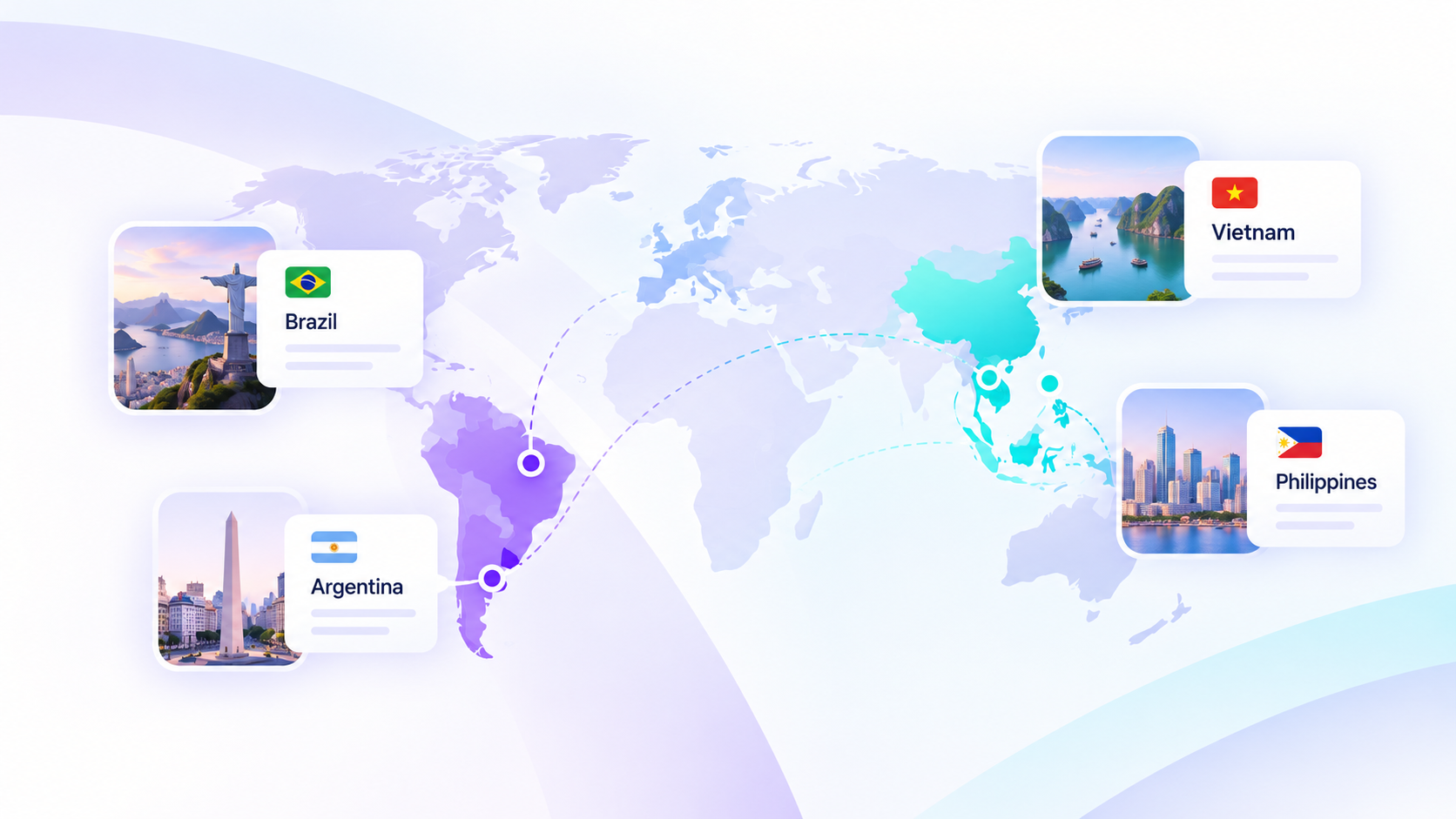
Brazil: QR on top of instant-payment infrastructure
Brazil demonstrates what happens when QR is combined with a payment system that reaches a large share of the population.
Pix now has more than 170 million individual users, equivalent to around 80% of Brazil's population, according to Banco Central do Brasil.
QR is one of the interfaces through which Pix payments can be initiated.
That distinction is important.
Consumers did not adopt a QR code in isolation. They adopted a broader instant-payment ecosystem that could be used for transfers, merchant payments and other everyday transactions.
QR became one convenient way to access it.
Argentina: interoperability changed the equation
Argentina offers another model.
Its interoperable payments framework allows users of different participating accounts and wallets to make payments through interoperable QR codes.
By August 2026, the country recorded 117.2 million QR-initiated interoperable payments by transfer in a single month, representing 67.5% year-over-year growth. The BCRA also reported 92 interoperable digital wallets and 67 payment-by-transfer acquirers.
Here, interoperability is fundamental.
The merchant does not need to depend on every customer using the same wallet.
The QR becomes a common entry point into a broader payment ecosystem.
Vietnam: the banking app became the interface
Vietnam illustrates another route to QR adoption.
Rather than requiring a separate payment experience, VietQR became closely connected to mobile banking.
By October 2025, nearly 90 million mobile-banking accounts were using bank applications capable of scanning VietQR codes. VietQR transaction volume grew by more than 52% during the first ten months of the year compared with the same period in 2024.
This creates a powerful advantage:
the customer does not need to learn a new payment interface.
The banking app they already use becomes the tool for interacting with merchants.
The Philippines: building acceptance around a common standard
The Philippines has taken an interoperability-led approach with QR Ph.
The Bangko Sentral ng Pilipinas requires participating payment service providers to adopt the national QR standard, designed to turn previously fragmented QR payment services into interoperable ones.
QR Ph is also being extended into everyday merchant environments. Through the Paleng-QR Ph programme, the BSP and local government partners are promoting QR acceptance among public-market vendors, community stores and local transport operators. As of July 2026, the programme covered participating or enjoined local governments across 1,566 LGUs.
Again, adoption is not simply about placing a QR code at checkout.
It is about building an ecosystem around it.
So why isn't QR dominant everywhere?
Because every market starts from a different place.
In markets with mature card infrastructure, widespread contactless acceptance and strong consumer familiarity with tapping a card or phone, QR must compete with a payment experience that is already extremely convenient.
Replacing it simply for the sake of using QR offers limited value.
This is why looking at QR adoption as a competition between technologies can be misleading.
The more useful question is:
What payment problem does QR solve in this particular market?
Where QR provides an inexpensive acceptance layer, connects multiple financial applications or gives consumers easy access to instant payments, the answer can be compelling.
Where existing payment infrastructure already offers a fast and familiar experience, the case may be weaker.
There is no universal payment interface
This leads to an important lesson for businesses expanding internationally.
Consumers do not change their payment habits simply because an international merchant enters their market.
They expect the merchant to support the way they already pay.
In one country that may mean scanning a QR code from a banking app.
In another, it may mean a wallet.
Elsewhere, tapping a card or phone remains the default.
The winning interface is therefore not necessarily the newest technology.
It is the one that fits the local payment ecosystem.
What this means for international payment businesses
For banks, PSPs, wallets and payment platforms, international expansion is therefore not simply about adding another payment method.
It requires understanding how consumers access money in each market — and connecting to the infrastructure behind that behaviour.
This is particularly important as domestic QR ecosystems begin connecting internationally.
A consumer should not necessarily need to understand which payment rail operates behind a merchant's QR code.
Ideally, they continue using the application and payment experience they already know.
The infrastructure does the translation.
That is where QR becomes more than a domestic payment interface.
It becomes part of the broader move toward interoperable cross-border payments.
Frequently Asked Questions
Why are QR payments more popular in Asia and Latin America?
There is no single reason. In many markets, QR developed alongside mobile banking, digital wallets, instant-payment infrastructure and interoperable payment standards, creating strong incentives for consumers and merchants to adopt it.
Why are QR payments less dominant in some European markets?
Many European markets already have extensive card and contactless-payment infrastructure. Where consumers and merchants have a fast, familiar payment experience, QR has to provide an additional benefit to change established behaviour.
Does every country need a national QR system?
No. Countries have developed different payment architectures. What matters is whether consumers, financial institutions and merchants can interact efficiently within the local payment ecosystem.
Will QR replace cards?
Not necessarily. Payment methods tend to coexist. The mix depends on local infrastructure, merchant acceptance, consumer behaviour and regulation.
You may be interested in:

.avif)