What Is Scan-to-Pay? A Simple Guide to QR Payments
QR payments are becoming part of mainstream payment infrastructure across Asia, Latin America and other fast-growing markets.For banks, PSPs and payment platforms, the important development is not the QR code itself. It is the payment infrastructure behind it and the ability to give customers access to local payment ecosystems through an experience they already understand.
.png)
What is Scan-to-Pay?
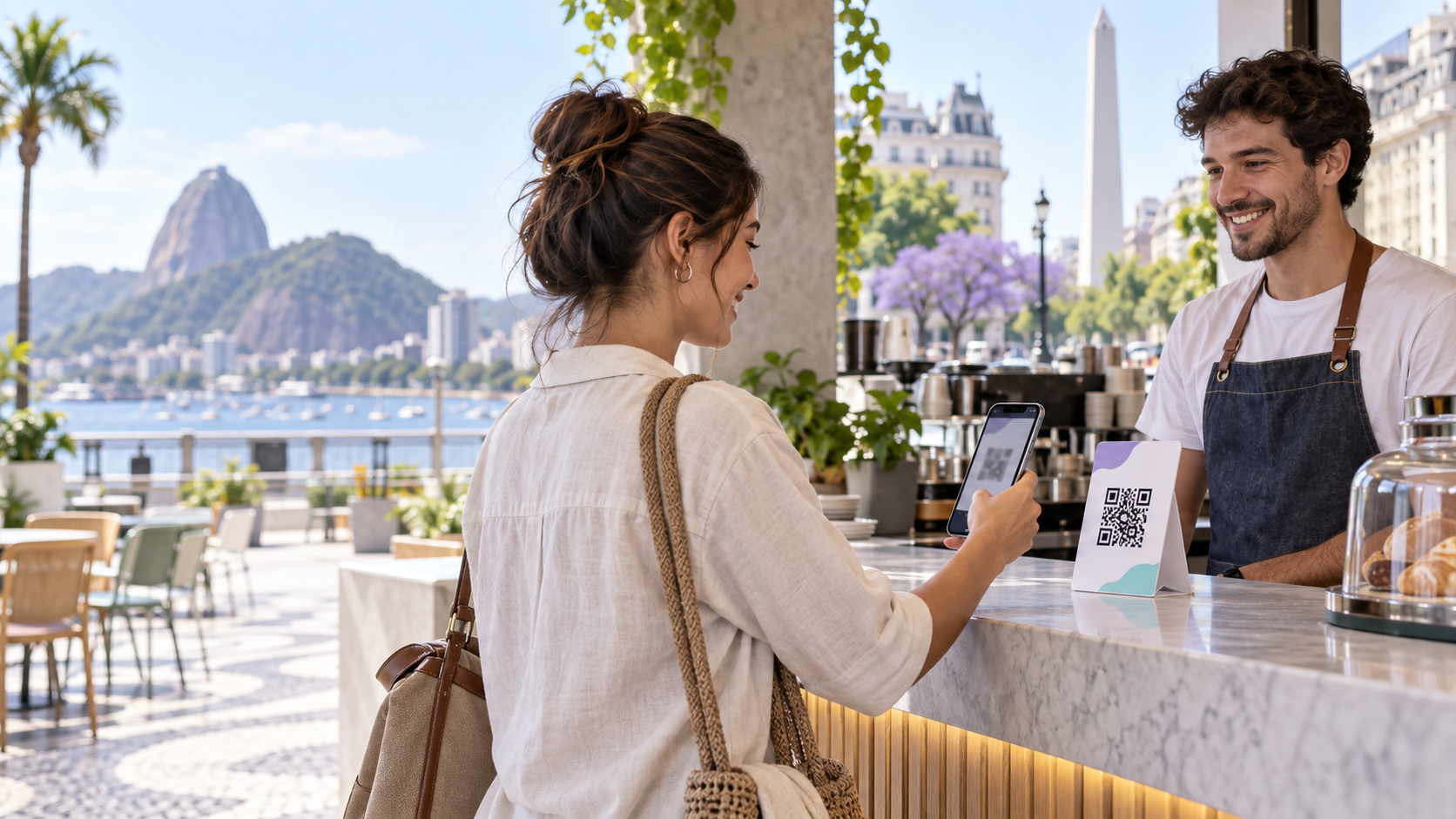
Scan-to-Pay allows a customer to initiate a payment by scanning a merchant QR code with a banking, wallet or payment application.
The customer experience is simple:
Open app → Scan QR → Check amount → Confirm → Pay
Behind that interaction, the payment can involve banks, wallets, payment providers, domestic payment networks and merchant acquiring infrastructure.
The QR code is therefore not the payment rail. It is the interface connecting the customer to the payment infrastructure behind it.
Why does Scan-to-Pay matter for businesses?
For financial institutions and payment companies, QR payments can provide access to large local payment ecosystems without relying exclusively on traditional card acceptance.
This matters particularly in markets where consumers already use domestic banking apps and wallets for everyday payments.
China has Alipay and WeChat Pay. Indonesia has QRIS. Vietnam has VietQR, the Philippines has QR Ph, while Pix has transformed instant payments in Brazil.
The underlying systems are different, but the business challenge is similar: customers increasingly expect to pay using the payment experience they already use at home.
Why are QR payments growing faster in some markets?
Payment behaviour is highly local.
In markets where instant payments, mobile banking and digital wallets developed quickly, QR became a natural merchant interface. In other markets, cards and contactless payments remain deeply established.
This is why businesses expanding internationally cannot assume that the same payment experience will work everywhere.
Understanding local payment infrastructure becomes part of market access.
From domestic QR to cross-border payments
The next step is connecting these domestic ecosystems internationally.
A customer travelling abroad could continue using their existing banking or wallet application to scan a local merchant QR code rather than downloading another payment app or changing their usual payment behaviour.
Making that possible requires more than QR recognition. Different payment systems need to coordinate routing, FX, authentication and settlement across markets.
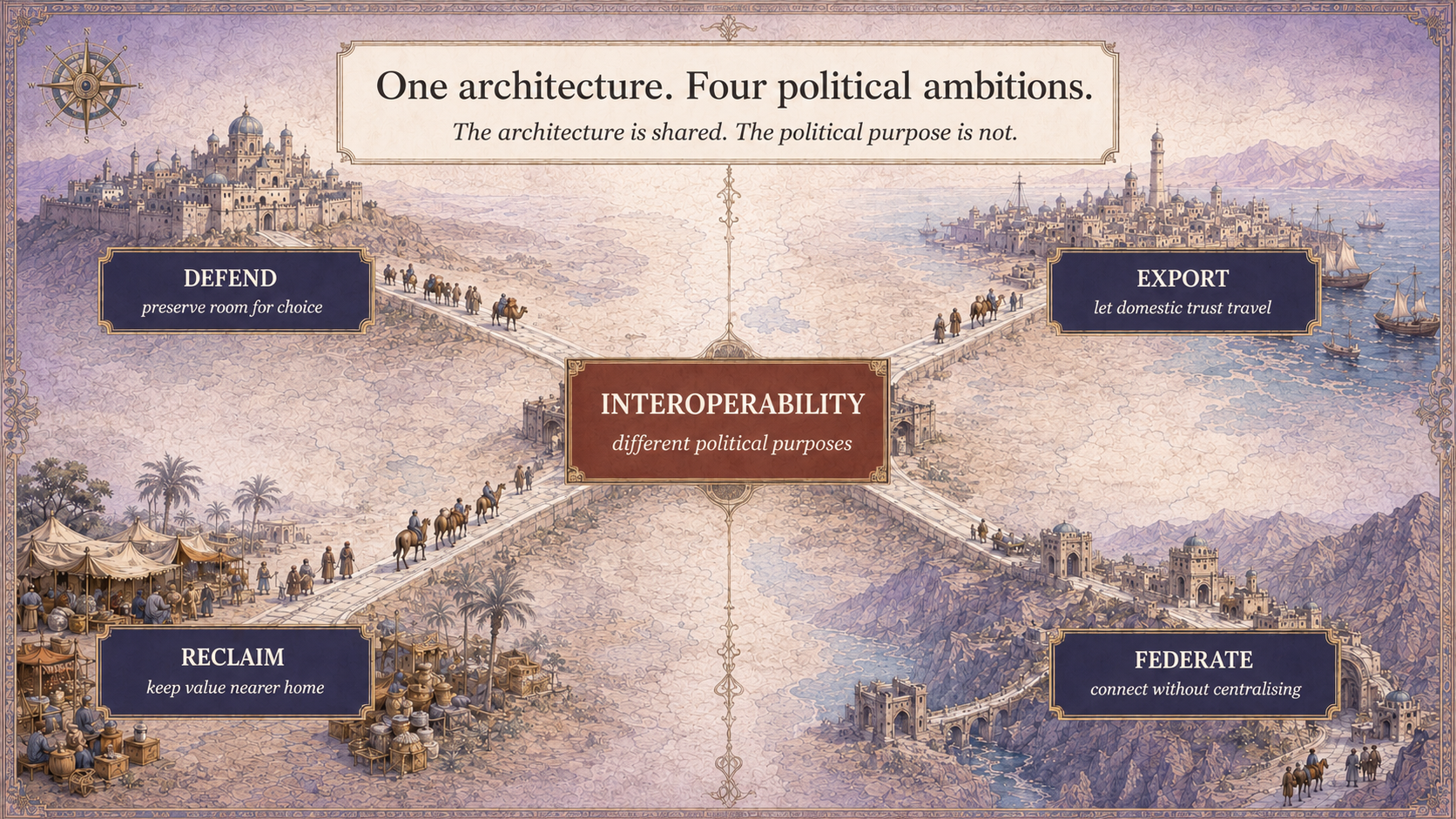
This is where QR interoperability becomes important.
As national QR and instant payment systems expand, the opportunity for banks, PSPs and payment platforms is shifting from supporting individual QR methods to connecting with entire local payment ecosystems.
Frequently Asked Questions
Is Scan-to-Pay a payment method?
Not exactly. Scan-to-Pay describes the payment experience. The QR code initiates a transaction, while the underlying payment rail processes and moves the funds.
Who can offer Scan-to-Pay?
Depending on the market and infrastructure, Scan-to-Pay can be offered through banks, digital wallets, PSPs, payment platforms and other financial applications.
Can Scan-to-Pay work across borders?
Yes. Cross-border QR interoperability can allow customers to use their existing banking or payment applications with compatible merchant QR networks abroad.
You may be interested in: