How Do QR Payments Work? From Scan to Settlement
Scanning a QR code takes seconds. Processing the payment behind it involves several layers of infrastructure.For banks, PSPs and payment platforms, understanding that flow is essential, particularly when the payer, merchant and payment systems operate across different markets.
How Do Scan to Pay QR Payments Work? From Scan to Settlement
Scanning a QR code takes a second. Processing the payment behind it involves several layers of infrastructure.
For wallets, Super Apps, Banks, Neobanks, PSPs and payment platforms, the challenge is simple: how can users pay through the app they already use when the merchant is connected to a different local QR ecosystem?
This is where cross-border QR interoperability comes in and how our technology allows users from one country to read QR codes from another.
Here is what happens between scan and settlement.
1. The customer scans the QR code
The journey begins when a customer opens his banking or payment app and scans the merchant's QR code.
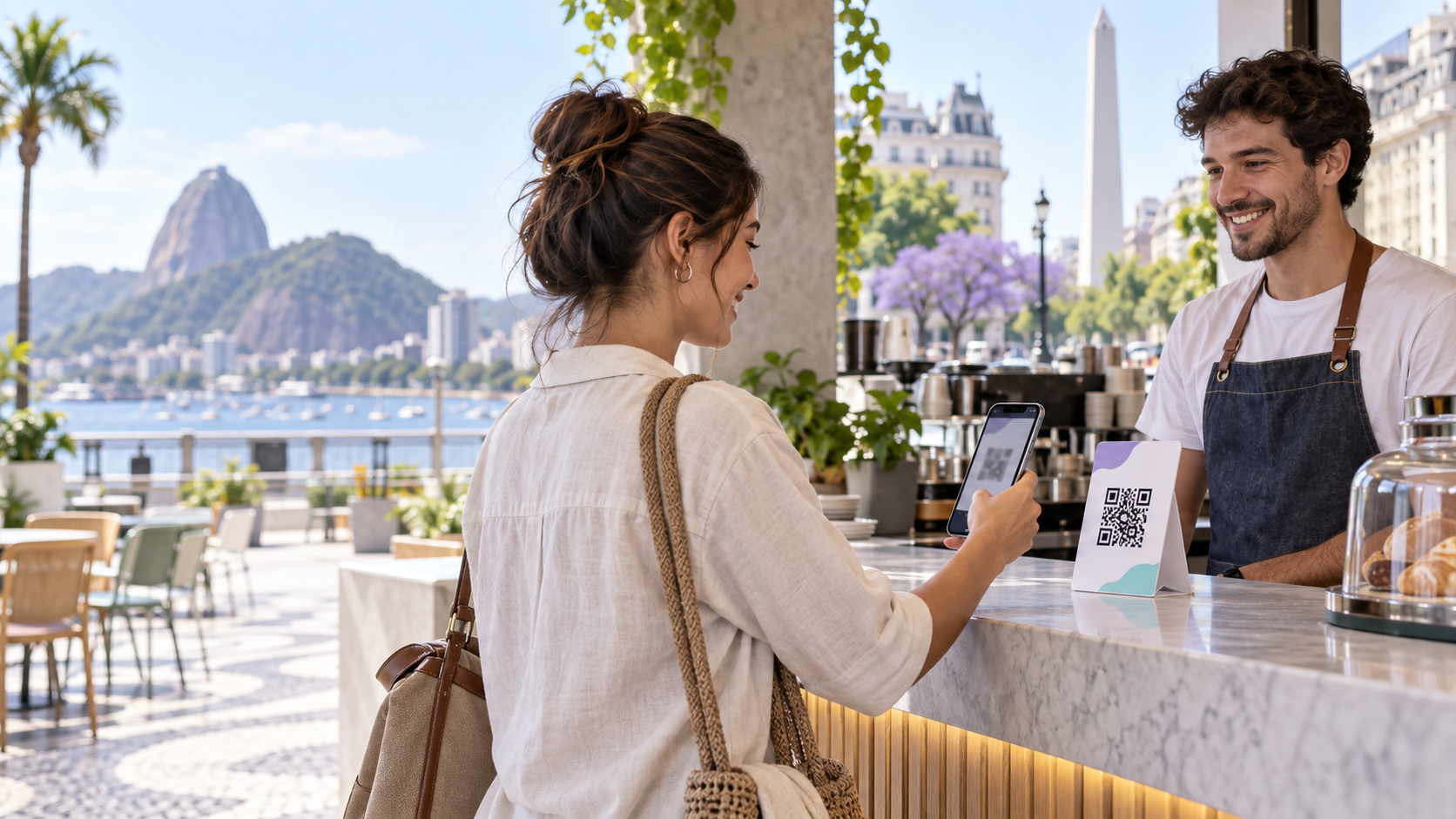
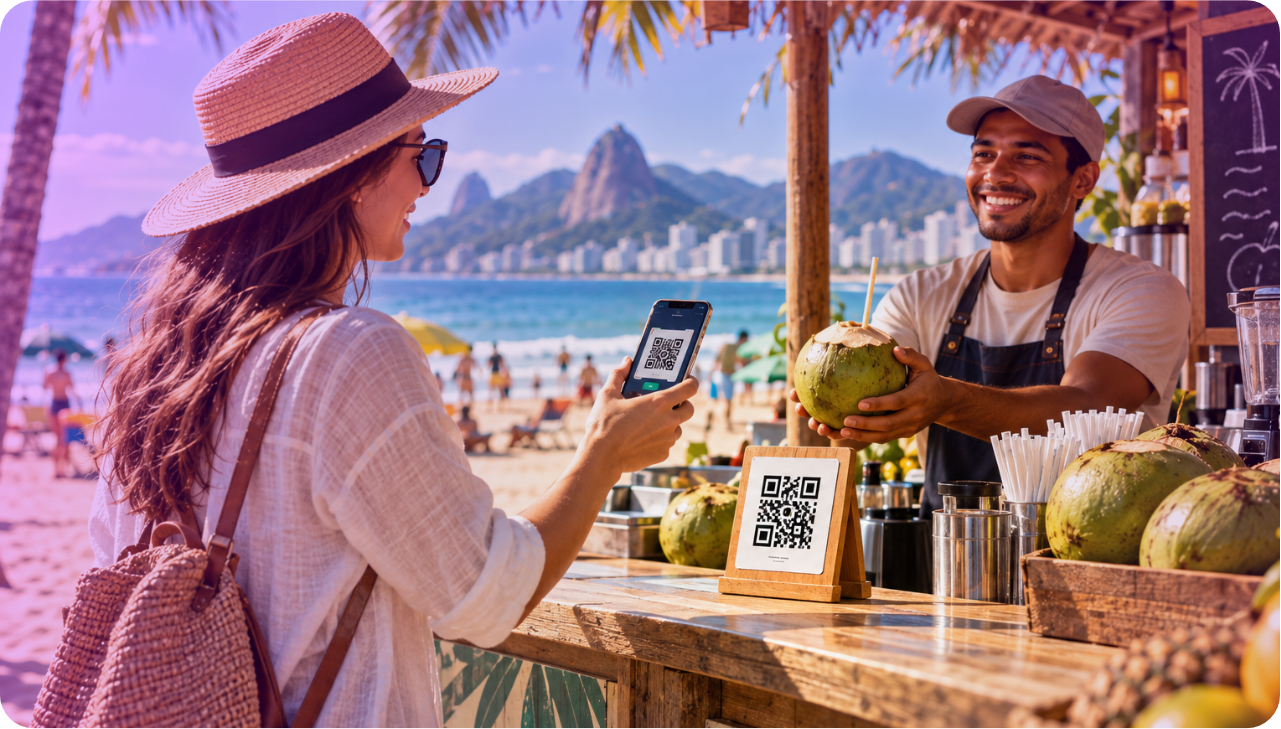
Imagine your customer is travelling to Brazil. He goes to the beach and wants to Pay for a “Agua de Coco” but he doesn't have money or his wallet.
No problemo, with our tech he will be able to read the QR code from the seller and pay.
The QR contains the information required to initiate the payment. From the user's perspective, nothing changes: they use the same app they already know and trust.
With 8B Scan-to-Pay, the goal is to make that familiar experience work across markets - connecting applications with local QR payment ecosystems without requiring users to switch to a local wallet or payment app.
But the QR code itself does not move money. It provides the information needed to initiate the payment.
2. The payment is identified and authorized
The customer's app reads the local QR and enables the user to proceed with the payment through their existing application.
The payer checks the amount and authorizes the transaction just like they would at home.
This is the core of interoperability: an app from one market can enable its user to pay through the QR infrastructure of another market.
For example, a user of a connected app could scan a supported local QR while abroad and complete the payment without changing their usual payment experience.
3. The transaction is routed
The payment instruction must reach the appropriate local payment infrastructure.
This is where the flow becomes more complex, particularly for cross-border payments.
Different markets operate different QR standards and payment networks. Vietnam uses VietQR, the Philippines has QR Ph, Brazil uses Pix, while Argentina's Transferencias 3.0 supports interoperable QR payments. Brazil's central bank confirms that Pix payments can be initiated by scanning a QR code, while Argentina's central bank describes Transferencias 3.0 as an interoperable system in which QR payments use immediate transfers.
For a payment provider, supporting multiple markets therefore means being able to recognize and route transactions into different local ecosystems.
What does this look like in real life?
Imagine a visitor travelling in Brazil. They stop at a beach kiosk to buy an água de coco, but they have no cash and no local wallet — only their phone.
The merchant already accepts Pix and displays the same Pix QR code they use for local customers. The visitor simply opens their usual banking or payment app, scans the QR code and confirms the payment.
No cash, no local wallet to download, no change in the merchant’s setup. The customer pays through the app they already use, while the merchant receives the payment through the local payment infrastructure
4. The local payment network processes the transaction
Once routed into the relevant domestic ecosystem, the payment is processed through the local payment infrastructure.
For the user, the experience remains familiar: scan, confirm, pay.
For the merchant, the experience remains local. There is no need to identify whether the customer is foreign or using an international application - the merchant continues accepting payments through the same local QR infrastructure already in place.
5. The payment is confirmed and settled
Once the payment has been processed, confirmation is returned through the payment chain.
For the customer, the journey ends with a familiar message:
Payment successful.
For the merchant, the transaction is also designed to feel local.
With 8B, merchants receive settlement through their existing local payment environment, in the same currency and within the same settlement framework they already use. They do not need to manage the cross-border complexity behind the transaction.
Why does this matter for payment businesses?
The consumer sees one QR code.
A bank, wallet or PSP sees multiple local payment infrastructures, technical standards, currencies and settlement models.
And those differences become more important as payment companies expand internationally.
A single integration layer can reduce the need to build and maintain separate connections to every local QR ecosystem - while allowing the customer-facing experience to remain familiar.
This is the infrastructure challenge behind cross-border Scan-to-Pay: making different local payment systems work together while keeping the front end simple.
For both consumers and businesses.
FAQ
What happens after a QR code is scanned?
The payment app reads the QR information, the customer authorizes the transaction, and the payment instruction is routed to the relevant payment infrastructure for processing, just like a local payment on both sides.
Does the QR code move the money?
No. The QR provides the information required to initiate the payment. 8B connects the user's payment application with the supported local payment infrastructure so the transaction can be processed through the appropriate domestic ecosystem.
Are all QR payment systems the same?
No. Different markets use different QR standards and payment infrastructures. 8B simplifies access to these ecosystems through a single integration, allowing banks, wallets, neobanks and payment platforms to offer cross-border QR payments without building separate integrations for every market.
How does 8B simplify cross-border QR payments?
8B connects participating banks, wallets, neobanks and payment platforms with local QR payment systems through a single integration. Users can pay through the app they already use, while merchants continue accepting and settling payments through their existing local infrastructure.
You may be interested in: