Uzbekistan Launches UzQR: A New National QR Standard for Digital Payments
Uzbekistan has officially launched UzQR, the country's unified national QR payment system, marking another significant milestone in the global shift toward interoperable domestic payment infrastructure. Starting July 1, merchants across the country are required to accept payments via the unified QR code. The initiative follows the presidential decree signed in December 2025 and the payment service rules approved by the Central Bank earlier this year. The launch places Uzbekistan alongside a growing number of countries that have introduced nationally coordinated QR payment systems designed to simplify merchant acceptance while strengthening domestic payment infrastructure.
.png)
One QR Code for Every Banking App
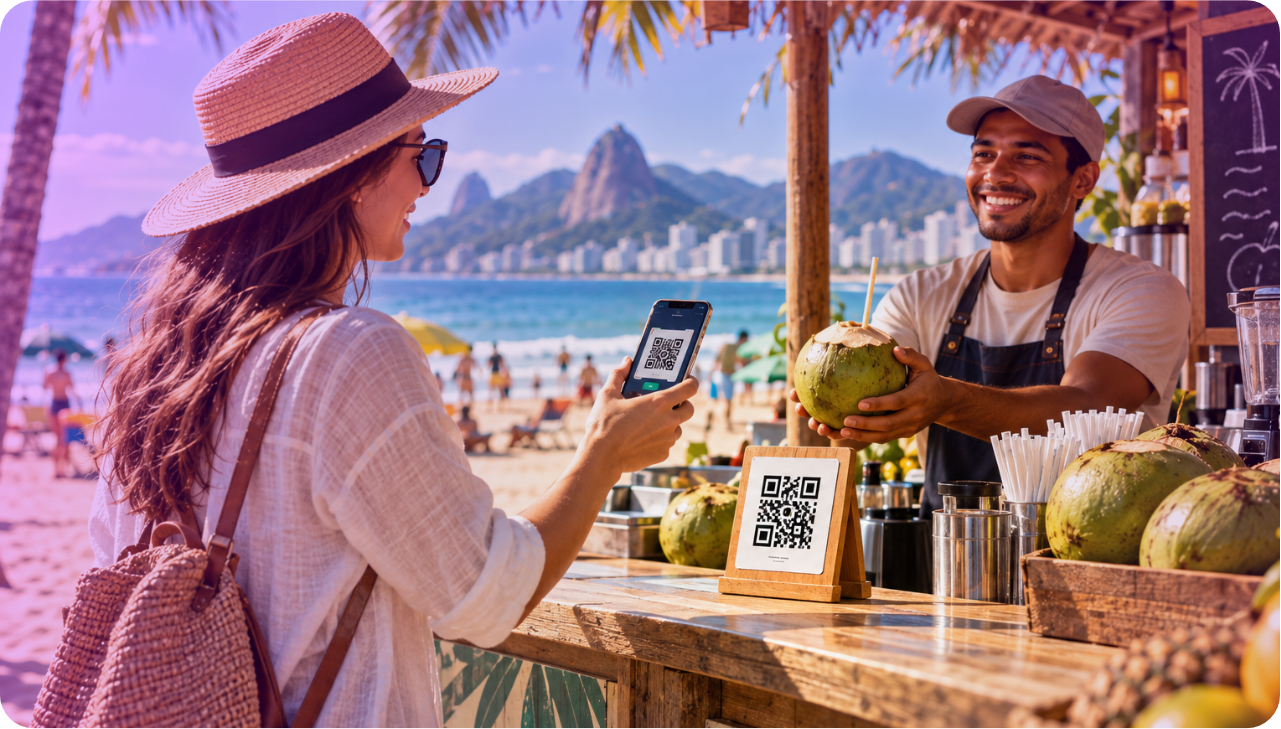
The core idea behind UzQR is straightforward: merchants display a single QR code, while customers can pay using any participating banking application or payment service.
The system currently supports Uzbekistan's two national payment schemes:
- Humo
- Uzcard
Instead of maintaining multiple QR codes from different providers, businesses only need one standardized QR code that works across participating institutions.
According to local banks, the new model offers several operational advantages:
- one QR code instead of multiple payment solutions;
- acceptance without dedicated POS terminals;
- easier payment reconciliation;
- funds credited to merchant accounts within 24 hours;
- simplified payment management.
For banks and payment providers, the standardized approach also reduces integration complexity across the domestic ecosystem.
A Broader Global Trend
Uzbekistan is far from alone.
Around the world, central banks and national payment operators are increasingly building unified QR standards that replace fragmented acceptance models.
Examples include:
- India's UPI QR
- Indonesia's QRIS
- Thailand's PromptPay QR
- Malaysia's DuitNow QR
- Vietnam's VietQR
- Brazil's Pix QR
Although each system was initially created for domestic payments, many are now expanding internationally through bilateral and multilateral interoperability agreements.
That evolution is gradually transforming national QR systems into the building blocks of regional payment networks.
Why This Matters for Cross-Border Payments
For international PSPs, banks, wallets and fintech companies, the growing number of national QR schemes creates both opportunity and complexity.
Every new domestic network adds another integration point.
Connecting separately to every country quickly becomes expensive and operationally challenging as more sovereign payment systems emerge.
The market is increasingly moving toward an interoperability layer that enables access to multiple national QR ecosystems through fewer integrations.
8B Perspective
UzQR is another example of a broader industry transformation.
Countries are standardizing domestic payment acceptance first, then expanding toward international interoperability. We've already seen this progression with QRIS, PromptPay, VietQR and other national schemes.
For payment providers looking to serve multiple markets, success will depend less on connecting to individual merchants and more on connecting to national payment infrastructure.
At 8B, we help banks, PSPs and fintech companies connect to government-backed QR payment ecosystems through a single integration, making it easier to expand into high-growth markets as national QR networks continue to evolve.
You may be interested in: